Wednesday, November 21, 2018

The Black Friday Challenge

 Top 12 Ways to Give Back This Season


Have you thought about where you will spend your money this weekend, with all the options available for Black Friday Sales and Small Business Saturday?

"How can I possibly help?" That's the disheartening thought we have when we see the vast gap of wealth and opportunities between rich and poor. Your local houses of worship or local organizations and schools that gather donations to support their programs, will be happy to remind you that every penny counts!
I don't know about you, but I know in my heart when I've crossed the line between conscious spending and fiscal gluttony, especially if I've recently passed up a chance to support my community.
It's the kickoff to the Holidays, and we want to enjoy the Season, right? Tempting bargains abound! It makes good sense/cents to think about your spending plan so that you come away feeling empowered by your money, and uplifted by your good fortune. So I offer you this formula for consideration: from every dollar that you save, put 10 cents or more toward "paying it forward" in some way.
So, not to be a total buzzkill, I suggest having fun on Black Friday if you are so blessed, and then tally up your savings to support Small Business Saturday! Here are 12 easy ideas, either for yourself or for gifting:
1) attend a gig, or buy a CD, Vinyl or merchandise from an indie musician
2) shop Etsy.com to find sole proprietors of jewelry, crafts, beauty
3) visit your local coffee shop (skip the big chains for a day!)
4) pre-order or give local experiences: classes, bowling, tours, tastings (esp. good for gifting to Millenials!)
5) subscribe to a local magazine, or buy a local author's book
6) give a visit to a local hair or nail salons, or blow-dry bar (date night!)
7) seek out local/artisanal beer, wine, tea, cheese, or honey
8) join a club: hiking, painting, knitting, reading
9) take that music lesson or singing lesson (or two, or three!)
10) purchase beautiful cards or stationery, and write to a friend
11) use a ridesharing service to get around town (no parking hassles!)
l2) give time, money, supplies...the YMCA, Senior Centers, Churches, Synagogues, Mosques, Homeless Shelters, Food Banks and Animal Shelters all welcome visits and donations more than you know!
I just know that if you give my Black Friday Challenge (share w #BFC) a try, you'll get off the beaten track and meet new people, while also feeling great about sharing your prosperity and making your community a little brighter.
BONUS: Squeeze in ALL 12 suggestions between Small Business Saturday and New Year's Day. Reply in comments with your list of "12 Gives" and automatically be entered to win a "New Year - New You" gift package, shipped to your home!

Lisa Donahey's new album CHRISTMAS IN OUR SOUL is a top-notch indie release!
Visit www.LisaDonahey.com for listening and purchasing!


Tuesday, October 9, 2018

New Release: "Hallelujah (feat. Nicolas Laget)"


Arun Shenoy, singer songwriter performance shot
Arun Shenoy: Singer-Songwriter and Producer

There's a new Contemporary Christian sound coming out of Narked Records, the label known for today's most exciting fusion music.  Led by 55th GRAMMY(R) Nominee Arun Shenoy, whose love of blending genres drives the label, his current band -- Arun Shenoy and The Maverick Express -- has produced a gem of a song that will shine as we head into the holiday season.  

"Hallelujah (feat. Nicolas Laget)" is a heart-opening work of praise, exultation and bliss that clocks in at 7:04! It is part of a new EP, The Unplugged Songwriter Sessions, which serve as Shenoy's singer-songwriter debut, and what a debut it is! The shy artist's deeply-resonant voice and polished singing technique is a welcome surprise, and the EP, while not thematic like his former albums, serves its purpose to present a broad scope of his abilities. One can't help but sing along, and a lyric video of Hallelujah is available for the enjoyment of praise and worship music audiences worldwide. 

Music critic Jonathan Widran reviewed the album in The JW Vibe, calling it, "A delightful, organically rendered singer-songwriter album featuring the guitarist’s lushly melodic melodies, simple yet thoughtful lyrics and, as a wonderful surprise, surprisingly graceful vocals..."

Industry reaction to "Hallelujah" has been so positive that Shenoy's management submitted it to the 61st GRAMMY(R) Awards for consideration in Contemporary Christian Music Performance/Song.

Old friends and new join Shenoy for this project, which includes the introduction of THE MAVERICK EXPRESS, a musical group and rolling roster of musicians comprised largely of Shenoy’s long-term collaborators. Lonnie Park serves as co-lead vocalist on the music, backed up by the powerhouse groove section of Duke Purisima on Bass, and Jerry Chua behind the Drums.

The band also features Vahagn Stepanyan on piano, Owen Gurry on the guitar and Nahuel Bronzini on string arrangements; Ian Cameron on Violin, Ravichandra Kulur on the flute and Matthieu Avanthey as the lyricist complete the lineup.  Featured guests include Nicolas Laget on the saxophone, Jon Sterckx on percussion and Jody Ward on backing vocals.

To listen to "Hallelujah" and to add it to your Spotify playlists, go to: https://open.spotify.com/track/7JChhBlOoUWW9kkOCGQVda

Explore Arun Shenoy's music and productions at https://www.ArunShenoy.com.   


Thursday, September 6, 2018

Sounds of Healing: Music’s Power To Heal

Neil Tatar, musician and workshop facilitator
Music can be so much more than entertainment, it often has a strong impact on the brain.  Science has proven that certain types of music boosts immunity, increases cognitive function and memory and can even help alleviate pain.  Mood-elevating music releases the powerful neurotransmitter, dopamine, which regulates our reward-motivational behavior. As a result, we may become joyful, enthusiastic, passionate and inspired, possibly even smarter, more creative and more productive.

New Age musician Neil Tatar is a composer, pianist and guitarist who says he uses music as a means of communication. “Music becomes my words,” he says. When he isn’t recording music, he focuses his creative energy on leading improvisational workshops for a variety of groups, including, regional arts councils, various college groups, adult mental health programs and camps for children with serious illnesses. His workshops echo the energy he brings from continued inspiration and training. As a facilitator, he creates a safe and supportive environment for participants. He welcomes the musically inexperienced as well as the seasoned professional.

Tatar saw music’s power first-hand when he recalled this memory of a woman, so disengaged, that he was wondering if she was sleeping.

“As the workshop progressed, I saw that she started communicating by tapping her foot to the music,” he said, noting that it could have been her way of communicating.

“Whenever you get any group together, it creates a safe community where people feel permission to communicate and facilitate an open conversation. They feel safe enough to express their feelings and it allows self-expression. The tapping may have been her words.”

Well-known scientist Albert Einstein was aware of the link between music and spatiality.  To him, music as much more than just a composition of notes and he said, “If I were not a physicist, I would probably be a musician. I often think in music. I live my daydreams in music. I see my life in terms of music.”

Just as mathematics can be considered both a science and an art, so can music.  In fact New Age musician Anaya (Aonki) often uses her background as a Digital Information Specialist to match the most effective sounds with her spiritual concepts, while guitarist-scientist Lawrence Blatt (FLOW) incorporated his love of the Fibonacci sequence into an album called Fibonacci’s Dream.

Many of us know that music has long been used operating rooms to help patients cope with anxiety and fear, but a fairly new program, utilizing music therapy, is being used by hospitals for patients undergoing surgery, rehabilitation or other procedures. The patient spends some time with the music therapist, who will ask what types of music evoke certain memories, and then will select music where the beats are aligned with breathing, heart rate, goals, etc.

Tatar said he was once told by a hospice nurse that one of his songs, “Where Did the Time Go?” was played throughout the facility to calm anxious patients:
“The song was inspired by a phone conversation with my mother. As we reminisced she said to me, “Neil, where did the time go?”

He continued: “Several years later when she was in hospice, I sent it to her.  Sadly, she died before it was able to reach her but, even through my sadness, I was gratified to learn it helped others.”

In fact, one of the highlights of Tatar’s long career occurred in 2017, when The C.A.R.E. Channel notified him that they would add his music to the channel, which is a music and relaxation program shown in hospitals and medical facilities throughout the United States. Neil's latest album is After The Rain.

YOUR BRAIN ON MUSIC: KIDS LEARN ITS POWER

Going beyond relaxation, music can also be a tool for motivation and learning. Tatar saw music’s ability to teach kids new skills and develop IQs from an early age, and he began teaching guitar when he was an undergraduate student at Boston University in the ’70s.


Many of the kids seemed distant and disinterested.  Always outspoken about music’s ability to engage and support people, one of the first questions Tatar would ask his students was “why are you here?”  Nine times out of 10, he said, he’d get some version of the “I’m-here-because my-parents-made me” response. So he turned the question around to “what do you like to listen to, and why?” Overwhelmed with the amount of dialogue it opened, he responded,  “Okay, we’ll address that in class, but first we have to do the ‘official’ stuff, like learning chords.”  


The students enthusiastically agreed, and actively participated in the class. His workshops to kids usually involve the creation of a composition, which develops:
  •      Understanding and reasoning: The kids have to keep asking themselves “Is this music in line with my writing?” and “Does it convey the emotions I’m looking for?”
  •       Listening skills:  In order to ask the above questions, one needs to listen and be aware.
  •       Self-esteem:  They need to stand up, present their piece, and take CONSTRUCTIVE criticism
  •       Learn the importance of collaboration. Even solo pieces often require harmonization.


So there you have it; whether you’re in need of relaxation, self-expression, or therapy, consider reaching for your instrument of choice, your favorite CD, or a new playlist to help you adjust your mood and reach the state of wellbeing that you desire. It’s not only nice to hear, but to paraphrase that well-known commercial, Music: It does a body good...and the brain, too.


Friday, August 10, 2018

MUSIC REVIEW: A TRICK OF THE WIND

            Erik Scott has taken full reigns of his creativity and showcased the extent of his abilities on his latest release A Trick of the Wind. Celebrating ten years of a positively successful career in the New Age music universe, Scott’s latest album resonates with the sounds of a man sure of himself and his creative vision. With his last release In the Company of Clouds winning two ZMR awards, it seems he used that success to fuel his next work and take it to the next level.
            The thing that I most admire about this collection of songs is that they are unpredictable. They keep a similar theme throughout but fearlessly mix things up to keep the listener intrigued. Right off the bat, the opening track, “Wings,” flows in gracefully with the use of delayed fretless bass and soft percussion. As the song progresses, the layers of synthesizers, added percussion, and female vocalizations start to fill in the blanks until a gust of wind welcomes in a sitar and additional male vocalizations. Just like that, the song goes from a jam to a full-on celebration of various sounds. “Ghosts of Storyville” is another piece that takes unexpected turns. Starting off with a simple pulse and some understated vocalizations, the song transforms into something much more jazzy. It’s reminiscent of something that would be in an old noir movie but with Erik’s New Age twist.
            The title track, “A Trick of the Wind” is a song that incorporates a lot of traditionally New Age elements yet still remains entirely unique to Scott’s style. The tinkling synthesizer and his use of delay emanate a feeling of projecting through the astral plane while his masterful work on the bass provides a grounding element. Though it is one of the more straightforward songs on the record, it still succeeds in conveying a strong mood. “The Invisible Wand” focuses on flow and feels more so like a jam between a group of kindred spirits. The breezy structure of the song is reminiscent of gentle waves, accented by a beautiful female voice. Keeping the same spirit, “Born Dreaming” is another beautifully flowy song that progresses into a dramatic crescendo. The album closes with a very playful track titled “A Child Remains.” Erik introduces new sounds such as synthetic wind and string instruments that help to guide the element of lightheartedness into the final track.

            Without a doubt, Erik Scott is a truly creative soul who has managed to produce yet another uniquely-individual contribution to music. With his trademark vision and dedication to the craft, one can only imagine what he will dream up next. For more information on Erik, visit his website at www.erikscottbass.com, and enjoy the video for "Salooka" on YouTube.

Samantha Garcia, Being

Thursday, July 12, 2018

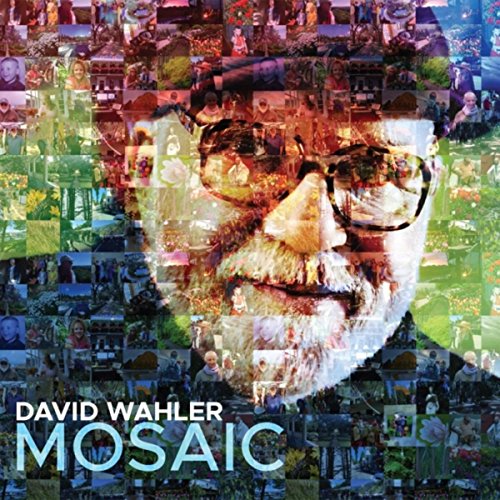
MUSIC REVIEW: MOSAIC


Award-winning composer David Wahler has created a minimalist body of work imbued with peace and tranquility. Having been immersed in music since the age of seven years old, Wahler’s approach to his arrangements displays a true understanding of what music should be: something evocative. He removes all the frills that are displayed in a lot of modern music and simply presents his audience with solid melodies and serene nuances.
Composer David Wahler
            
Nearly a decade ago, David Wahler’s debut album, Antiquus, was released and met with critical acclaim. Now with his latest release of Mosaic, he tactfully melds the two worlds of piano melodies and electronic soundscapes into an album reminiscent of the 80s and 90s. 

The title track of the album showcases that ability perfectly well. What seems like a simple song is so much more when put under the microscope, with every little individual sound coming together as a collective to create something much greater and larger as a whole. Following, “Afterain” comes in with a far more laid-back and relaxing vibe. Birds sing and wind chimes tinker along with some gentle vocalization. This track is less of a song and more so of a mood. It isn’t until “A Promise to Keep” that Wahler comes in with his trademark piano melodies. They aren’t the most complex melodies but they definitely serve their purpose in setting a pleasant atmosphere. Hitting the midway point of the album, “August Cloud” explores more of the same territory utilizing simple piano melodies and subdued electronic nuances to create a sound that transports the listener out of their head and into a different world, high above the clouds.

            
In an unexpected twist, the track “Elysian Dawn” comes in strong with mesmerizing angelic operatic vocals layered on top of a pleasant harp melody. Gentle sounds of the outdoors help to evoke the sensation of being out in a lush garden on a sunny day. “Sakura” is laden with subtle Japanese influences that evoke the memories of a spring bloom. Similar in tone, “Lone Sky Night” and “Fou D’Amour” go heavy on the 80s-influenced synthesizer, giving off a more stylized vibe than some of the other pieces. Ending the album with a question, “Why?” is one of the simplest, most pensive of the tracks. After taking you on a mystical journey, Wahler leaves you pondering.


A true example of modern new age music, Mosaic does a great job at putting the listener at peace. It takes true skill to be able to evoke emotions using a minimalistic approach and David Wahler accomplishes just that. To read more about David, go to his website at www.davidwahler.com and make sure to purchase his latest album, Mosaic, available on most music sites; you'll also want to check out his innovative design-inspired SounDecor playlists on Spotify.

Samantha Garcia

Tuesday, May 1, 2018

MUSIC REVIEW: They Were Here

           
Producer-percussionist Byron Metcalf and singer-songwriter-author Jennifer Grais have managed to blend their two passions for music and shamanic healing into one hauntingly beautiful collaborative concept album. The artists' shamanic influences are quite apparent in the vibe of this latest work, They Were Here, exploring the plight of America’s wild horses. The energy of the music is both reverent and mournful as they explore the ongoing mistreatment and loss of these magnificent creatures, one of our most unique national treasures.
            
Jennifer Grais: singer-songwriter and author of "Christa's Luck."

This album is less song-oriented than others, rather, it functions more like one complete, flowing work of art. Native American influences run thick in the veins of They Were Here to create the perfect setting for such a tale. Metcalf provides the majority of the instrumentation including frame drums, rattles, udu, ceremonial drums and synthesizer.  His characteristic style of tribal-trance drumming is the energy that fuels this piece, providing the driving force that echoes the sounds of horse hooves galloping with intense gusto. Ron Oates lends a helping hand on keyboard, synthesizers and orchestral arrangements as well. Jennifer Grais’ heart-wrenchingly beautiful vocals soar like an eagle to perfectly accompany the earthiness of the instrumentals.

Byron Metcalf, award-winning musician & shamanic practitioner.
The title track sets the mood for the album as it opens with the sounds of horses galloping as the earth stirs underneath their hooves. Slowly, the ambient music sets in like a looming mist that rises incrementally. The sound of Dashmesh Khalsa on didgeridoo wavers ominously in the background as Grais’ mournful vocalizations take the forefront. Henceforth, the songs get incrementally more intense as the story lingers on until reaching a crescendo in the fourteen-minute “Run.” Fiercely carried by driving beats and Grais’ intense, almost desperate chants, the track sets the scene of wild horses fleeing their native homes. Wrapping up the album, “Song for Solo” feels like an ending to a melancholic story, one that is very personal to Grais. It emanates a sense of mourning for what has been lost, yet incorporates sounds of nature, providing a reminder that life carries on ever still.

With They Were Here, Byron Metcalf manages to create a concept piece using ambient music. Utilizing his creative ways with music, he manages to create a soundscape that brings awareness to mother earth.  This album is available on Amazon and iTunes. For more information, and to experience the music, visit www.byronmetcalf.com.

-Samantha Garcia, BEING